
A Wholesome Health Clinic patient spotlight
From the Couch to the Stage: Jessa's Story of Healing from Lyme Disease
At just 11 years old, growing up in Wyoming, Jessa Mae Clark was bitten by a tick. At the time, it seemed like nothing — no visible rash, no reason to think twice about it. Lyme disease wasn't something people talked about much back then, and life went on.
It would be years before that single moment turned into the defining health battle of her life.
The Slow Build of a Mystery Illness
Looking back, Jessa can trace the first warning signs to high school: short stretches, maybe a week at a time, where her whole body felt heavy and exhausted, as if walking a few steps took the effort of climbing a mountain. She chalked it up to normal immune system dips — everybody gets run down now and then. The episodes came and went throughout a church mission and into college, never lasting long enough to raise real alarm.
Then came the summer of 2020.
While managing the greenhouses at BYU-Idaho, Jessa noticed her grip strength failing and her stamina disappearing. This time, the exhaustion didn't go away after a week. It stretched into months. Simple tasks — dragging a hose, holding a glass of water — became genuinely difficult. She went to doctor after doctor, and every lab came back normal.
It was an aunt who had long struggled with Lyme disease herself who first suggested what was going on. A Lyme-literate medical doctor ran the right tests, and on the very last day of 2020, Jessa finally had an answer. By then, she'd spent an entire summer largely confined to the couch, too fatigued most days even to make a real meal — surviving, she remembers, mostly on popcorn because it was one of the only things she had the energy to prepare.
Finding Wholesome Health
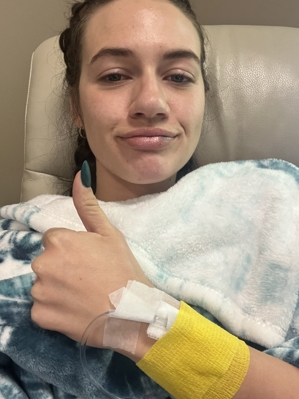
A diagnosis, even a difficult one, brought Jessa something valuable: direction. Around this time, she was also job-hunting, and a front-desk position at a holistic health clinic caught her eye for a very personal reason — she wanted access to MAH therapy but couldn't otherwise afford it. She figured an employee discount might make it possible. That's how she found her way to Wholesome Health Clinic.
The receptionist job itself, she laughs, was anything but the "cushy" role she imagined — but the treatments she began receiving as an employee quietly started shifting the trajectory of her health. She began seeing Dr. Wheeler, started MAH therapy, and completed a series of ten full-dose NAD IV treatments. NAD infusions weren't pleasant in the moment; Jessa felt worse, not better, while hooked up to them. But months later, looking back, she recognized that period as the real turning point.
Dr. Wheeler also gave her something to read: Breaking the Habit of Being Yourself by Dr. Joe Dispenza. That book, paired with the physical treatment, began to shift not just Jessa's body but her mindset.
Small Wins That Felt Like Miracles
After four months at the clinic, Jessa moved to Utah for a new job — and it was there that the pieces started coming together. She returned to school for her master esthetician license and, cautiously, returned to the gym: not running, not incline, just walking on a flat treadmill.
"Holy crap, I can do that," she remembers thinking. "My body is a miracle."
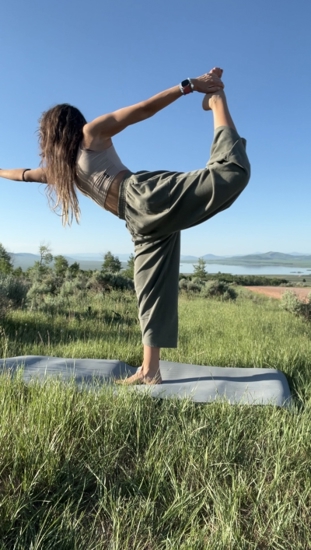
Each small increase — a little incline, a light set of weights — felt monumental. Jessa has come to see this as an important lesson in her healing: her instinct is always to go all-in and push hard, but Lyme recovery doesn't reward that. "Time is part of the equation," she says now. "You can't throw more at your body than it can handle. It's going to take time, no matter what."
As her strength returned and she began to notice actual muscle developing, a new idea took hold: bodybuilding. She hadn't realized regular, everyday people competed in the sport — but watching bodybuilders prepare at her gym after moving back to Idaho, she thought, I could do that. What started as curiosity turned into purpose. The same body that had once been too weak to hold a glass of water was now something she was actively building on purpose. Lyme disease, she decided, wasn't going to tell her what she could or couldn't do.
Setbacks, and the Treatments That Carried Her Through
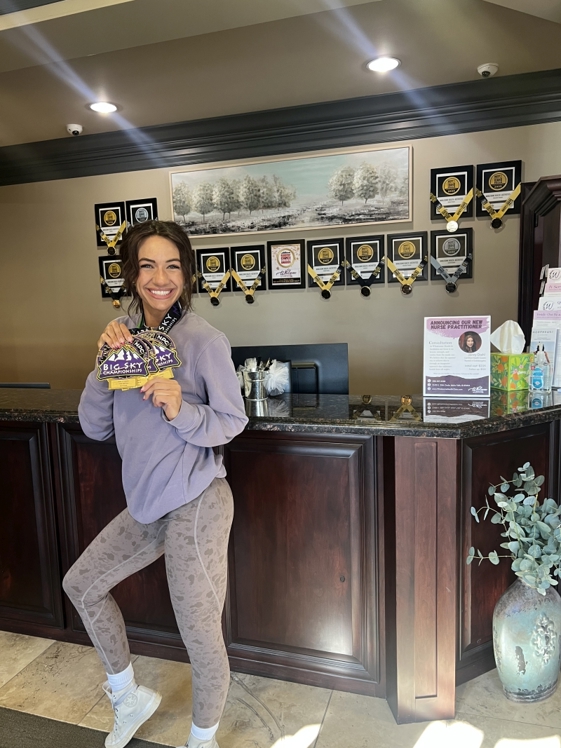
Jessa competed in her first bodybuilding show in April of last year. Major personal stress in the months leading up to it — stress being, she's learned, the number one trigger for a Lyme flare — had been quietly building the whole time. Her body held together just long enough to get her through the competition. Afterward, it caught up with her all at once, and she flared hard, losing mobility and grip strength again.
That flare launched a new phase of treatment at Wholesome Health:
- Continued MAH therapy, an ongoing part of her care plan.
- Nagalase testing, which measures a protein that can "cloak" diseased cells — including those affected by Lyme — from the immune system.
- Salicinium IV therapy, a 15-infusion protocol (five days a week for three weeks) designed to strip away that cloaking so the immune system can do its job. Jessa felt worse before she felt better on this protocol, but noticed real energy returning underneath the fatigue.
- Weekly NAD injections, maintained as ongoing support.
- Targeted herbal supplements aimed specifically at reducing Lyme bacterial load — another round that made her feel worse before it made her feel better.
- Exosome IV infusions, which Jessa describes as one of the most impactful treatments in her recovery, even though the process wasn't easy. Exosomes are designed to travel to the areas of the body that most need healing. Jessa underwent three rounds, and each came with a Herxheimer reaction — the body's response to toxins released as Lyme bacteria die off. The first round brought weeks of shortness of breath and profound weakness; a third, higher-dose round left her feeling unwell for roughly two months.
Underlying all of it, Jessa points to endobiogeny — an approach that looks at how the body's systems function together — as essential groundwork. If the nervous system is in a constant state of alarm, she explains, the body can't properly receive or respond to treatment. Calming that internal "fight or flight" state had to happen before the deeper healing could take hold.

A Mindset That Changed Everything
Ask Jessa what made the biggest difference in her recovery, and the treatments are only half the answer. The other half is a fundamental shift in how she thinks about her own body.
"You don't recognize how much your thoughts control your physical health," she says. Instead of viewing her body as something fighting against her, she came to see it as something fighting for her — working hard, doing its best, and deserving of trust rather than frustration. That shift, sparked by the Dispenza book and reinforced through working closely with Dr. Wheeler, became a kind of prerequisite for everything else to work.
It's a lesson she's carried into bodybuilding too, where a good coach has helped reinforce the same message: she is not a victim of her diagnosis. She has agency in her own healing.
Looking Ahead
Just a few weeks before this conversation, Jessa noticed something small but telling: she woke up tired — but it was ordinary, sleepy tired, not the bone-deep fatigue-tired she'd grown used to. It was the first time in a long time she could tell the difference, and it told her she was genuinely on the mend.
She's rebuilding steadily — lifting four days a week without crashing, adding light cardio five days a week — and setting her sights on another bodybuilding competition next spring. Beyond that, she's looking forward to a full training season to build real muscle, something her last flare didn't allow her to do.
She's also watching the clinic itself evolve. Treatments that didn't exist when she first walked through the door — exosomes, salicinium therapy, and now a new hyperbaric chamber — are already part of her care. "What things are going to be here in a couple of years that are even better?" she wonders.
Her Advice for Others Facing Lyme Disease
Jessa's message to anyone walking a similar path is simple, and it starts with the mind: "Work on your mindset. Be grateful. And know that there are things out there that do help."
She's quick to point out that Lyme disease looks different in every person — what worked for her may not work for someone else, and vice versa. Healing, she says, is often trial and error, and that's not a reason to give up hope.
"As soon as you change your mindset, that's when things start to improve," she says. "That's the first step."
Wholesome Health & Aesthetics
Start your journey toward health & beauty from the inside out!
Schedule your appointment to begin treatment that works for you.
Call today 208-557-0200 or click to